The Best Time to Hike the Haute Route: A Month-by-Month Guide
When to hike the Walker's Haute Route from Chamonix to Zermatt — season overview, monthly conditions, and what to expect on the trail from June through October.
Don't want to read all this?
We've planned 2,000+ hiking trips. Send your dates, fitness and group size — we'll map the route and book every night.



The Walker's Haute Route crosses 11 passes above 2,500 m between Chamonix and Zermatt. At that altitude, the hiking window is narrow and the difference between months is significant. Snow, hut openings, trail conditions, and crowd levels all shift week by week — choosing the right month matters more on the Haute Route than on almost any other trek in the Alps.
The short answer: the Haute Route season runs from mid-June to late September, with July and August as the core months. But each month within that window offers a different experience, and the best time depends on what you prioritise — guaranteed trail access, quiet huts, stable weather, or autumn colour.
Season: mid-June to late September (occasionally into early October)
Peak months: July and August — all passes open, all huts staffed
Best weather window: late July to mid-August — warmest, most stable
Quietest month: September — fewer hikers, cooler temperatures, golden light
Highest pass: Col de Torrent, 2,919 m — typically snow-free from early July
Hut booking: 2–4 weeks ahead in July–August; easier in June and September
For how hut opening and closing dates affect your planning in practice, read our guide to huts on the Haute Route.
Season Overview
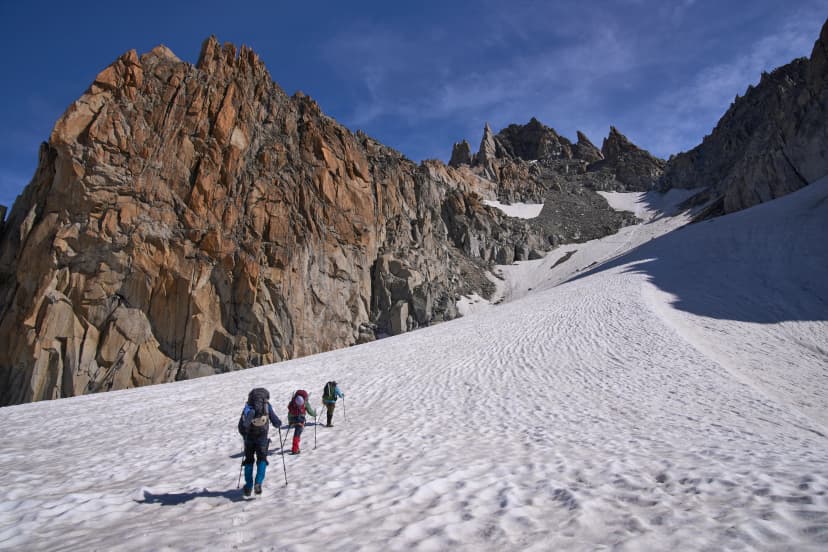
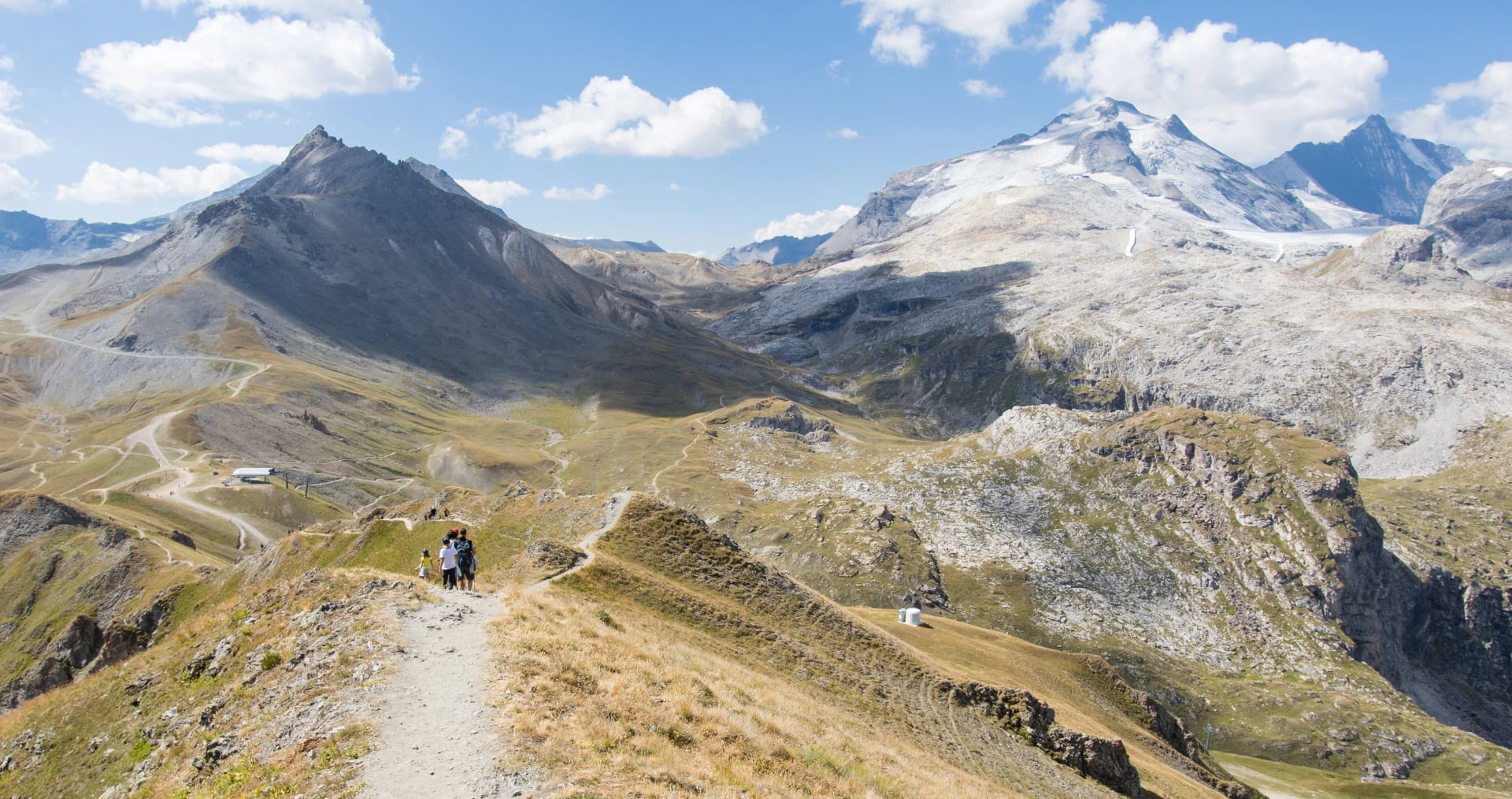
The Haute Route is not a four-season trail. Snow closes the high passes from October through May, and most SAC huts along the route are only staffed from mid-June to mid-October. The Pas de Chèvres ladder section and several cols above 2,800 m can retain snow patches into early July in heavy snow years, making mid-July through mid-September the most reliable window for completing the full route without snow equipment.
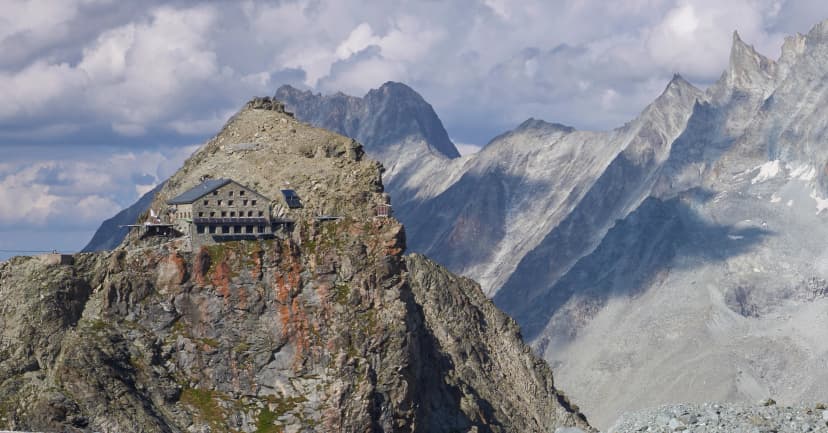
That said, experienced hikers with microspikes and early-season confidence can start as early as mid-June, and mild autumns occasionally extend the season into the first week of October. The key constraint is hut availability, not trail difficulty — once the SAC huts close, there's nowhere to sleep between valley stages.
For cost and weather recommendations that apply across the full season, see our Haute Route cost breakdown and Haute Route weather guide.
Best Months Breakdown
Pros:
Fewest hikers of any month — near-solitude on most stages
Wildflowers beginning at lower elevations
Hut availability is easy — no booking pressure
Longest daylight hours of the season (15+ hours)
Cons:
Snow patches likely above 2,500 m — microspikes and gaiters recommended
Some huts may not yet be open — check SAC hut opening dates before booking
Trail markings can be obscured by late snow
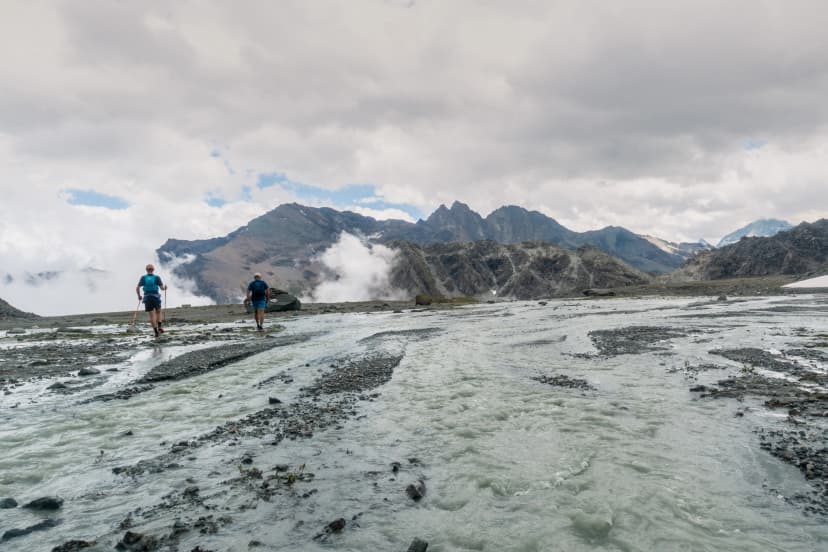
Higher river crossings may be swollen with snowmelt
Weather is less stable than July–August
Best for: experienced hikers comfortable with residual snow, flexible on dates, and happy to carry microspikes. Not recommended as a first Alpine trek.
Pros:
All passes reliably snow-free by the second week
All huts open and fully staffed
Long daylight hours (14–15 hours)
Wildflowers at peak bloom in alpine meadows
Warm enough for comfortable hiking in a base layer and wind shirt
Cons:
Peak season pricing and crowds — huts book up 2–4 weeks ahead
Afternoon thunderstorms increasingly common from mid-month
Popular stages (Europaweg, Zinal to Cabane de Moiry) can feel busy
Higher demand for self-guided tour availability
Best for: hikers who want the full Haute Route experience with maximum trail reliability. The standard choice for a reason — and the month we recommend most often for first-time Haute Route trekkers.
Pros:
Warmest temperatures and highest freezing levels — most comfortable hiking conditions
Zero snow on any section of the route
All huts fully operational with extended kitchen hours
Most stable weather window of the season (though storms still occur)
Best conditions for the Pas de Chèvres ladders — dry rock, no ice
Cons:
Busiest month — huts at full capacity, especially weekends
Book 3–4 weeks ahead minimum; popular huts (Mont Fort, Moiry) may need more
Afternoon heat at lower elevations can make valley stages tiring
Less visual drama than shoulder months — no snow on peaks, hazier visibility
Best for: hikers who prioritise warmth, stability, and zero snow risk above all else. Ideal if you're less comfortable with cold or unpredictable conditions. Book early.
Pros:
Dramatically fewer hikers — quieter huts, emptier trails
Best visibility of the season — crisp air and long views
Golden autumn light and larch colour from mid-month
Easier hut booking — often available with just a few days' notice
Still warm enough for comfortable hiking with the right layers
Cons:
Shorter daylight hours (11–12 hours) — less margin for slow stages
Temperatures drop significantly — sub-zero nights, cold mornings
Some huts close mid-to-late September — check dates carefully
Higher chance of early snow above 2,800 m, particularly after mid-month
Weather windows are shorter and less predictable than July–August
Best for: experienced hikers who value solitude and autumn scenery over guaranteed warmth. Our favourite month for repeat Haute Route trekkers — the trail feels like a different place compared to August.
Pros:
Near-total solitude — you may not see another trekker all day
Stunning autumn colour at lower elevations
Off-season pricing on any huts still open
Cons:
Most SAC huts closed or closing — limited accommodation above valley level
Snow likely above 2,500 m — full winter kit may be needed
Very short daylight hours (10–11 hours)
Weather highly unpredictable — winter storms possible at any time
Not viable for the full 14-day route in most years
So When Should You Go?
For most hikers, the answer is straightforward. July or August for reliability, September for atmosphere. If this is your first time on the Haute Route, July gives you the best balance of open trails, staffed huts, and reasonable weather without August's peak crowds.
If you've done the route before — or you're an experienced Alpine trekker who values quiet trails and golden light over guaranteed warmth — September is the month we recommend most enthusiastically. The Haute Route in September feels like a different trek entirely.
For a detailed comparison of the Haute Route against the Tour du Mont Blanc — including difficulty, cost, and which to do first — see our Haute Route vs TMB guide. For a full cost breakdown including huts, transport, and self-guided tour pricing, see our Haute Route cost breakdown.

Once you've chosen your month, our Switzerland hiking itinerary guide walks you through what a typical day on the trail actually looks like hour by hour.
Ready to Book?
We offer self-guided Haute Route tours in three formats — accommodation, route notes, GPS navigation, and 24/7 on-trail support included. Luggage transfers available as an optional extra.
Still deciding between the Haute Route and the Tour du Mont Blanc? Weather is one of the key differences — our route comparison covers how they differ season by season.
Not sure which month or format fits your schedule? Send us an inquiry or book a free planning call — we'll help you pick the right window.



Plan with a hiking expert
Free advice from a team that knows these routes inside out - real people, not a bot

Hassle-Free
We handle itineraries, accommodations, and anything else you prefer not to deal with, so you can enjoy a carefree hike.

Book with confidence
We are a financially protected company, fully bonded and insured, keeping your money safe and allowing you to travel with confidence.

Tried & Tested Adventures
Only the best hut to hut hikes of Switzerland, cherry-picked by our local team with an in-depth knowledge of the region.

Unbeatable support
Our 24/7 customer support is where we show our passion, bringing you a better experience by making your well-being our number one priority.