Switzerland Hiking Itinerary: What to Expect
What a typical hiking day in the Swiss Alps actually involves — from morning routines and trail conditions to hut arrivals and evening meals, hour by hour.

Jon
Published March 19, 2026
Edited April 16, 2026
8 min read
Quick links
Don't want to read all this?
We've planned 2,000+ hiking trips. Send your dates, fitness and group size — we'll map the route and book every night.



If you've never done a multi-day hike in Switzerland, you probably have questions about what the days actually look like. How early do you start? How long are you walking? What do you eat? When do you arrive? What happens in the evening? This guide walks through a typical mid-route stage on a Swiss hut-to-hut trek — the kind of day you'd experience on the Via Alpina, Haute Route, or Kesch Trek — so you know exactly what to expect before you go.
5–7 hours of walking on a typical stage
800–1,200 m of elevation gain and a similar amount of descent
Breakfast and dinner provided at mountain huts; lunch is self-carried
Trail markings every 50–100 m — Switzerland's system is among the best in Europe
Afternoon arrival between 2:00 and 4:00 PM at most huts
Curious which tours follow this kind of daily rhythm? Browse our Switzerland hiking tours to see the routes we run.

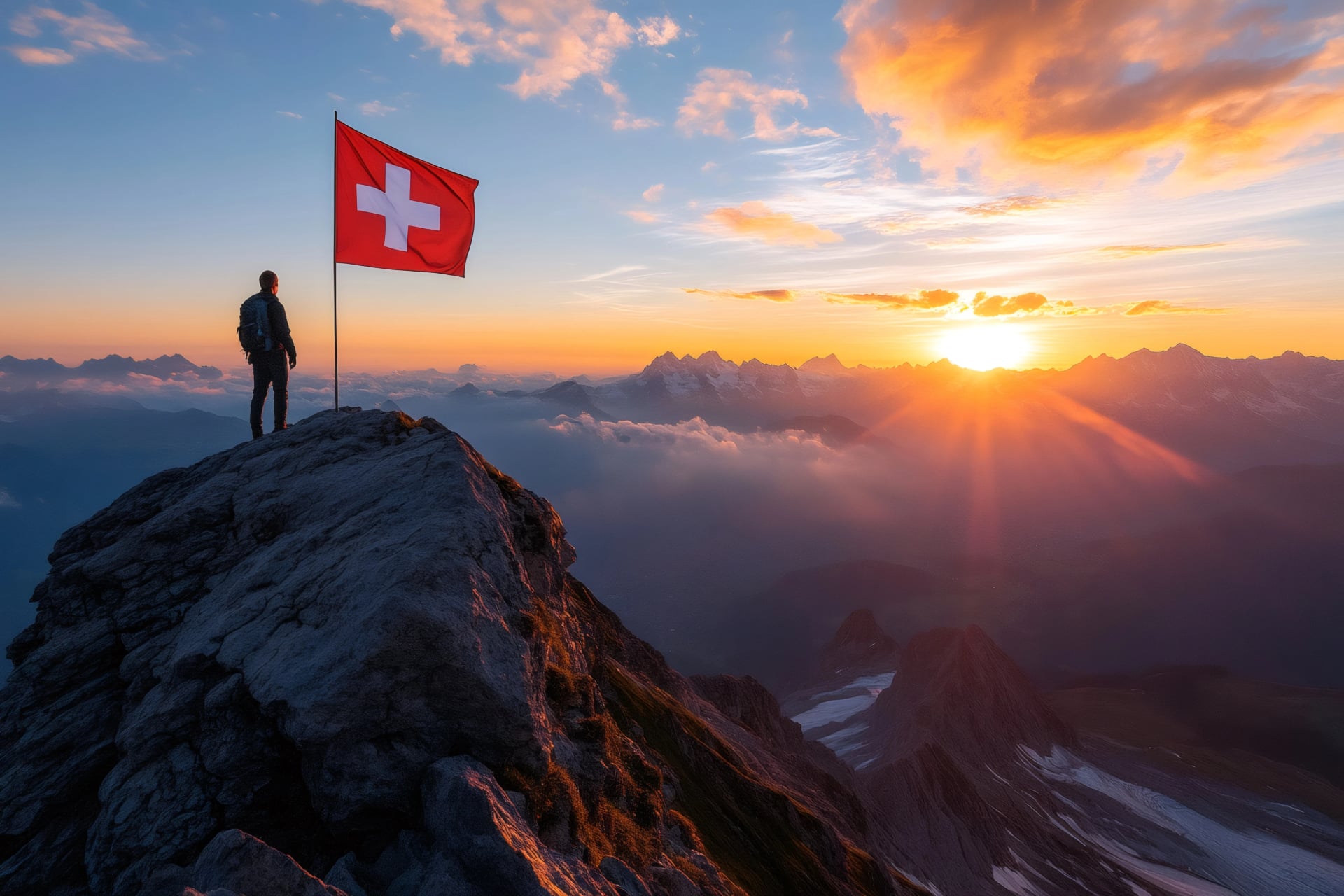
Morning — Breakfast and Departure (6:00–8:00 AM)
The day starts early. Most huts serve breakfast between 6:00 and 7:30 AM — bread, jam, cheese, cold cuts, muesli, and coffee. It's simple but sufficient, and it's the fuel you'll run on until lunch, so eat well even if you're not a morning person.
The reason for early starts is practical, not cultural. Afternoon weather patterns above 2,000 m mean thunderstorms can build from midday onward, particularly in July and August. Starting by 7:30–8:00 AM gives you the safest window for crossing high passes before conditions deteriorate.
Before leaving, fill your water bottles — not all huts keep taps accessible after checkout. Settle any extras at the bar (drinks, showers, snacks from the night before). Check the day's forecast on MeteoSwiss and ask the hut warden about current trail conditions — they know the local terrain better than any app or guidebook. Your bag should already be packed from the night before, so the morning routine is quick: breakfast, boots on, trail.
The Trail — What the Walking Is Actually Like (8:00 AM–1:00 PM)
This is the core of the day and where most first-timers have the most questions.
Terrain and Trail Markings
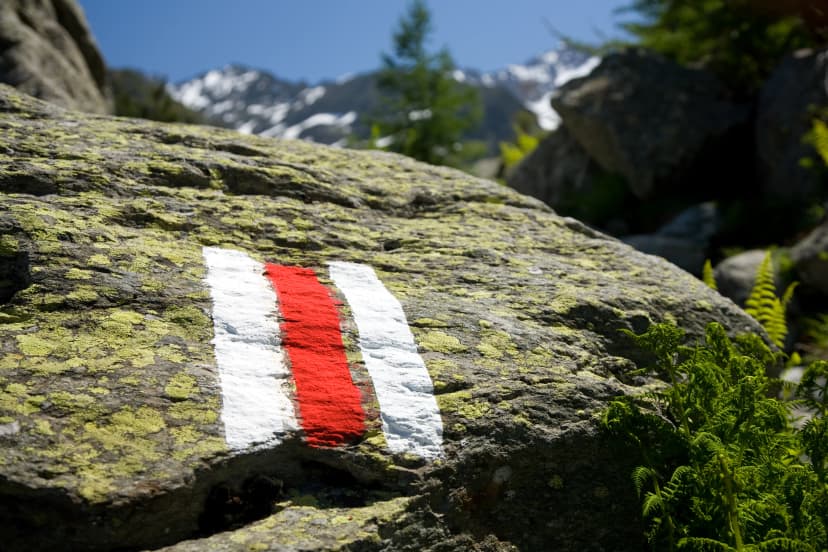
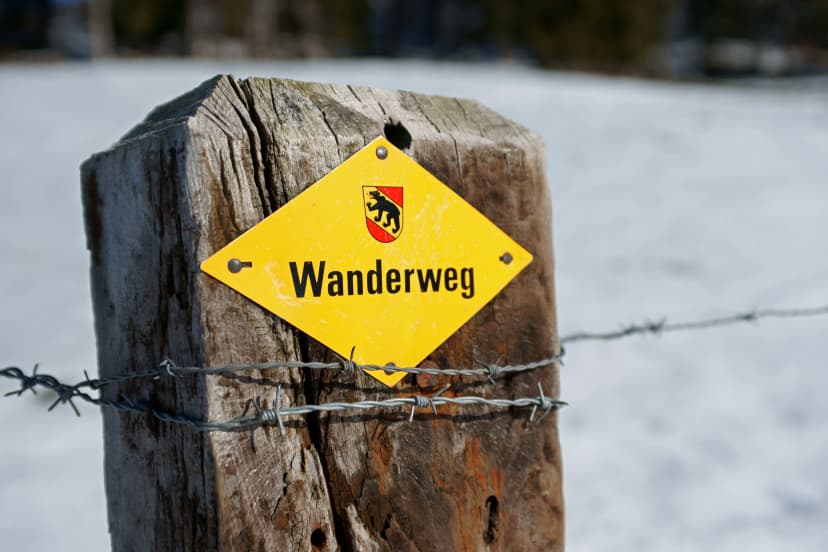
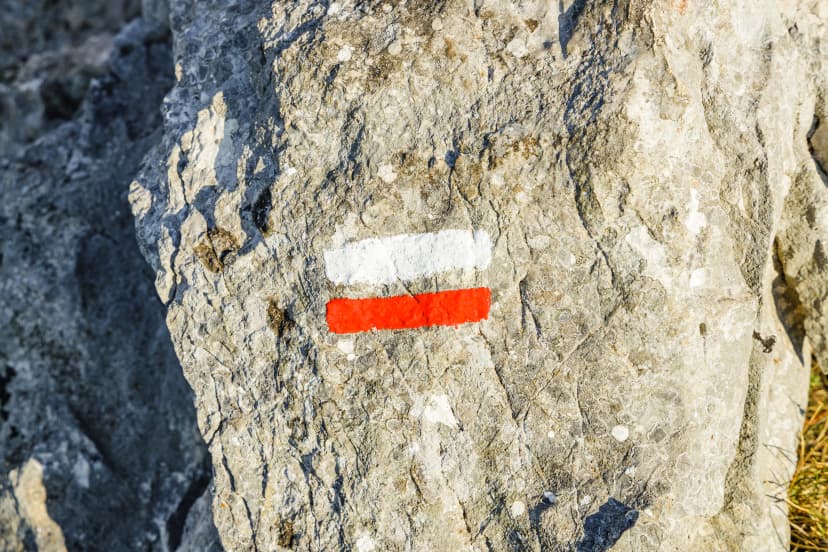
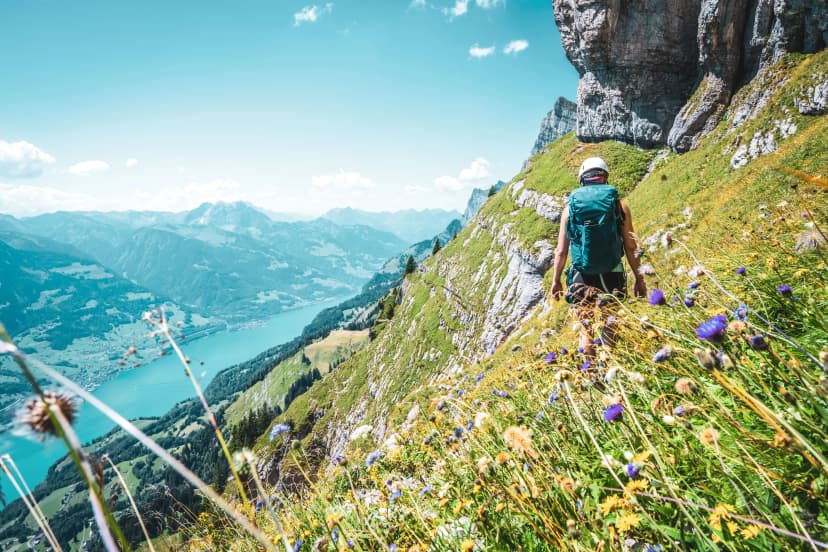
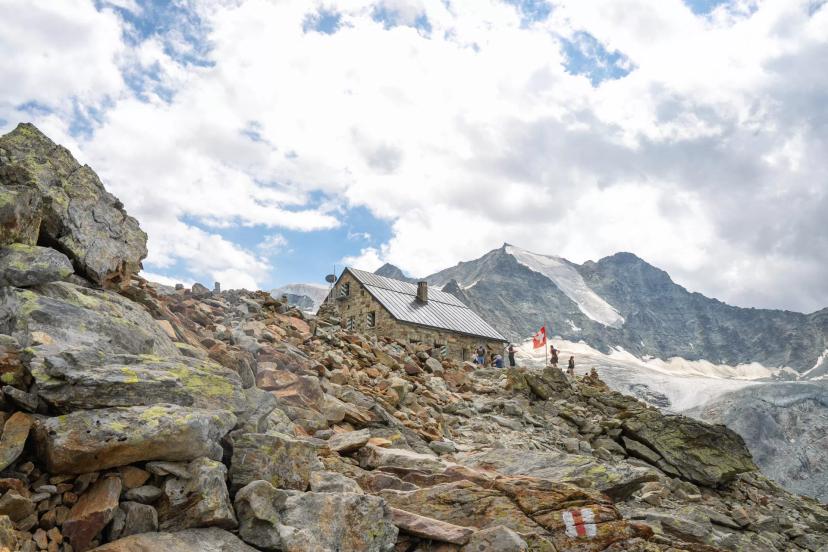
Switzerland uses a standardised trail marking system that is among the most reliable in Europe. White-red-white blazes painted on rocks every 50–100 m mark mountain hiking trails (T2–T3 difficulty). White-blue-white marks alpine routes that involve scrambling or exposed sections (T4+). Yellow signposts appear at every junction showing your destination, estimated walking time, and trail grade. You will almost never be unsure of where to go.
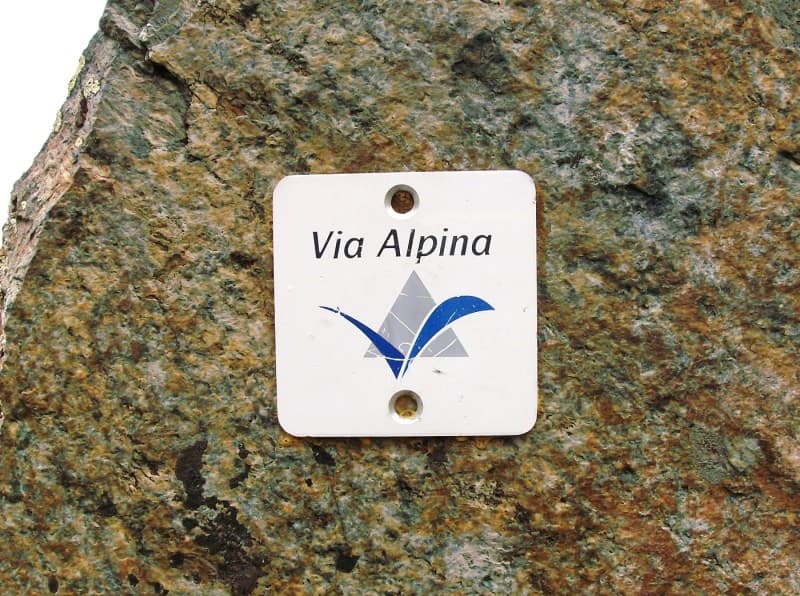
For the full official breakdown of what each grade means, the SAC trail grading scale is the definitive reference. Here are the main marker categories to watch out for:
Typical Stage Profile
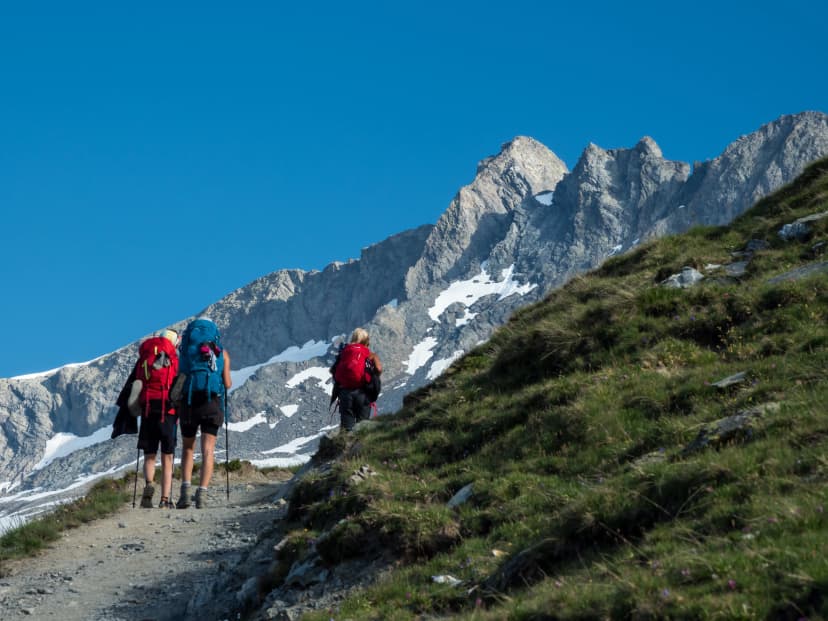
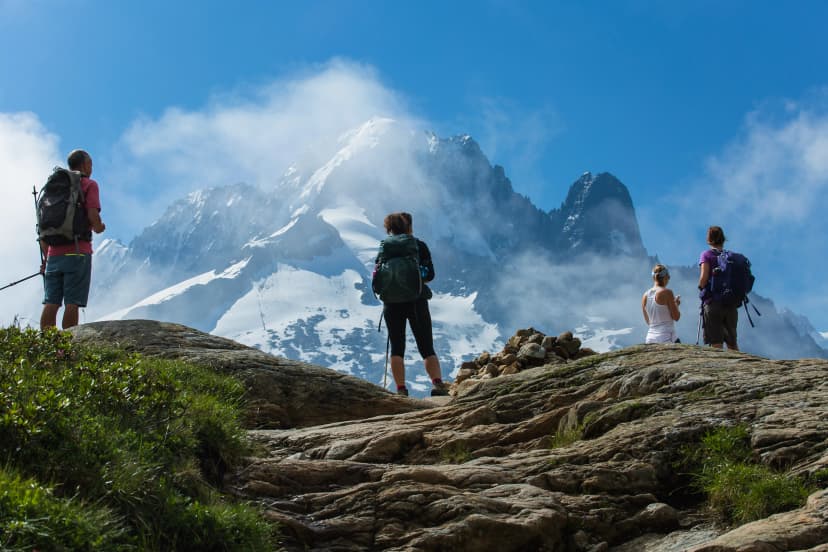
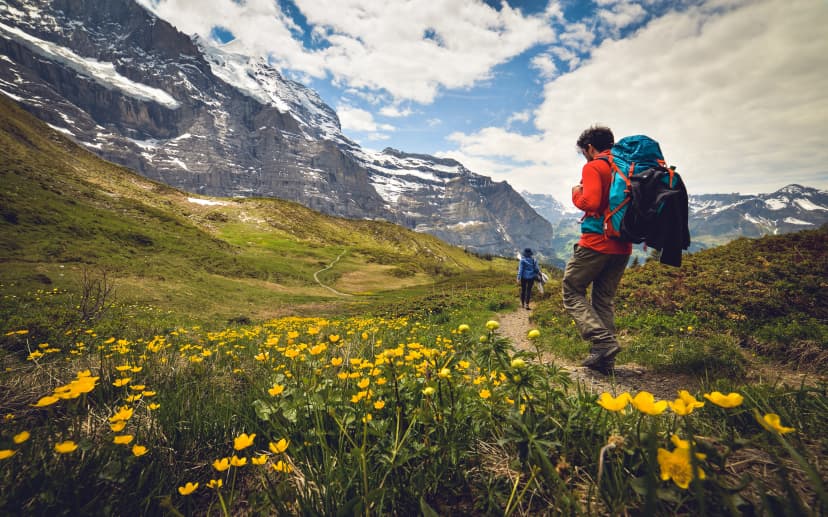
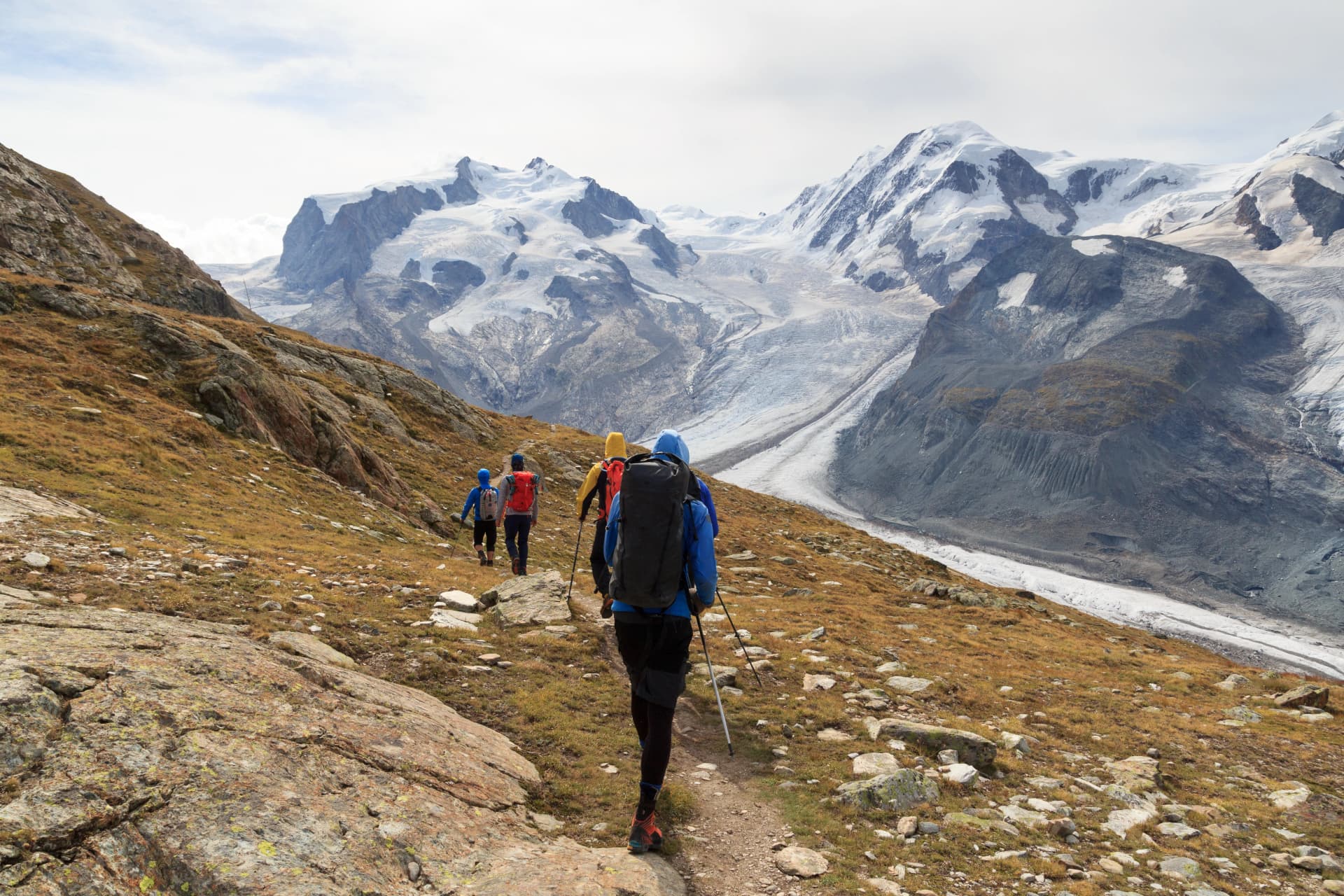
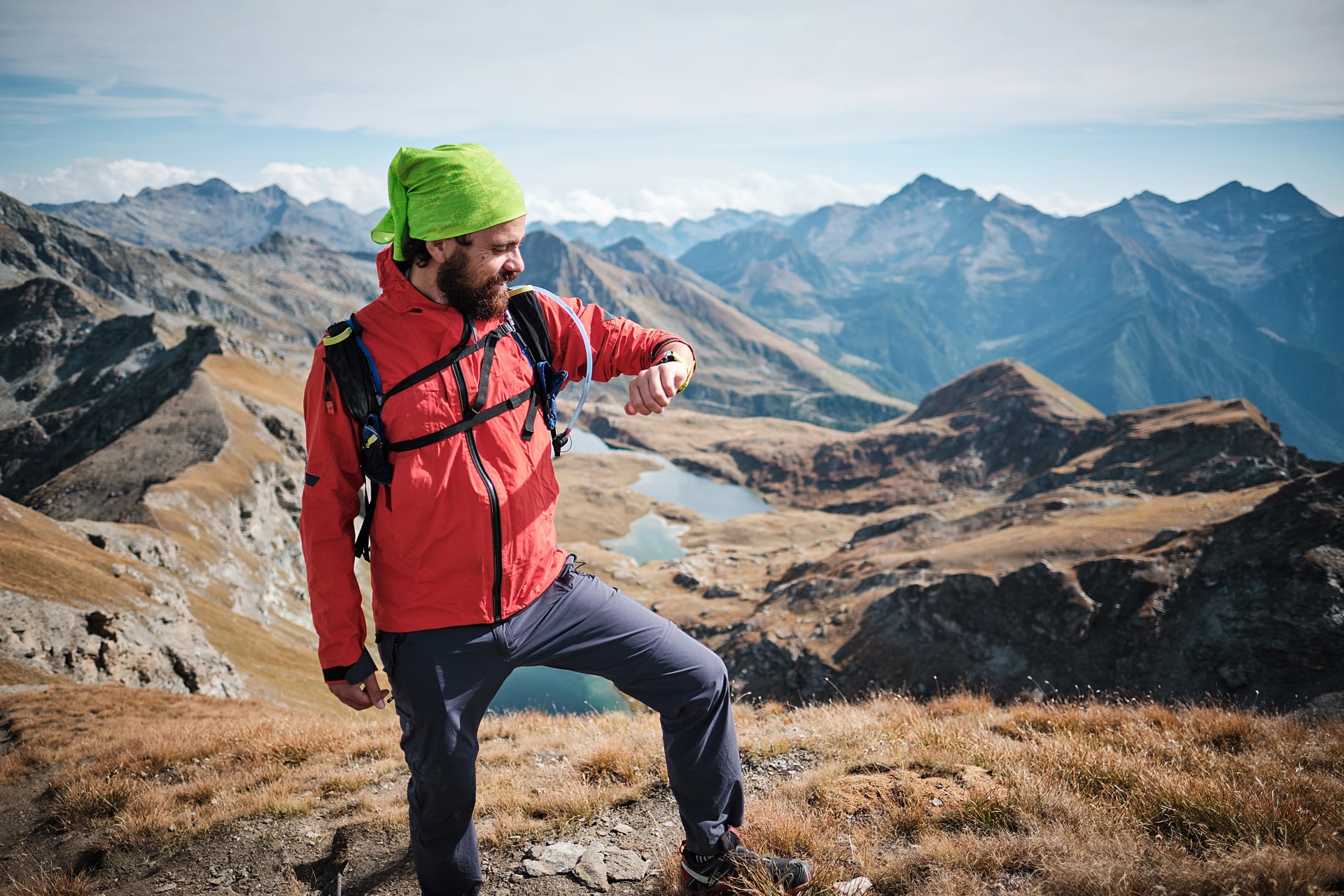
Most stages follow a similar pattern: a valley approach through meadows or forest, a main climb of 800–1,200 m to a pass or col, and a descent to the next hut or Berghotel. Total walking time is typically 5–7 hours. The important thing to understand is that elevation gain matters far more than distance — a 12 km day with 1,100 m of ascent is significantly harder than a flat 20 km walk. Trail signposts show time rather than distance for exactly this reason.
Pace and Breaks
Steady rhythm beats speed on every Swiss trail. The hikers who sprint the first hour are usually the ones sitting on a rock looking exhausted by the third. A sustainable pace means you can talk without gasping, and you arrive at the day's high point with energy left for the descent. Rest every 60–90 minutes for water and a handful of trail mix.
The climb is cardiovascular — lungs and legs doing honest work. The descent is mechanical — knees and ankles absorb every metre you gained on the way up, and trekking poles reduce that impact significantly. If you don't already own a pair, see our packing guide for what to look for.
Weather Awareness
Conditions change fast above 2,000 m. A cloudless morning can become a full thunderstorm by early afternoon, particularly in July and August. The general rule on any Swiss high route: be over the highest point of the day by 1:00 PM if afternoon storms are forecast. This isn't always possible, but it should guide your departure time. Check MeteoSwiss at breakfast, watch the sky as you climb, and don't hesitate to turn back if conditions deteriorate faster than expected.
Lunch — Where and What You'll Eat
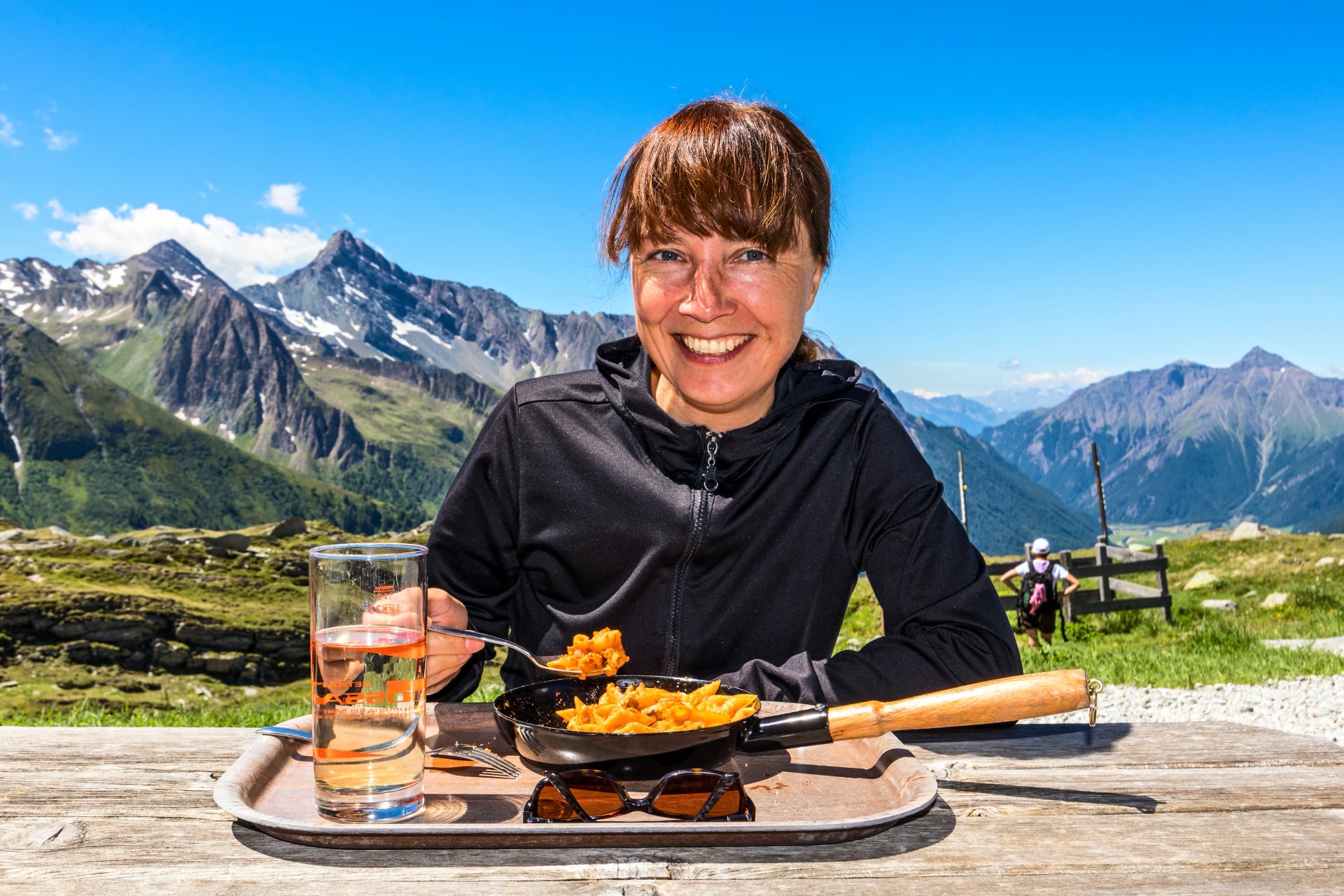
There's no restaurant service mid-trail on most stages. Lunch is what you carry: bread, cheese, dried meat, chocolate, nuts, an apple — bought in valley towns before the trek or ordered as a packed lunch from the previous hut (usually CHF 12–18). Some routes pass a staffed Bergrestaurant or cable car station mid-stage where a hot meal is available, but don't plan around it — assume you're self-sufficient between breakfast and dinner.
The best lunch spots are sheltered from wind, near running water, with something worth looking at. You'll develop an instinct for these by Day 2. Budget 20–30 minutes — enough to eat, rest your feet, and refill water if a stream is nearby.
Afternoon — Arrival and Recovery (2:00–6:00 PM)
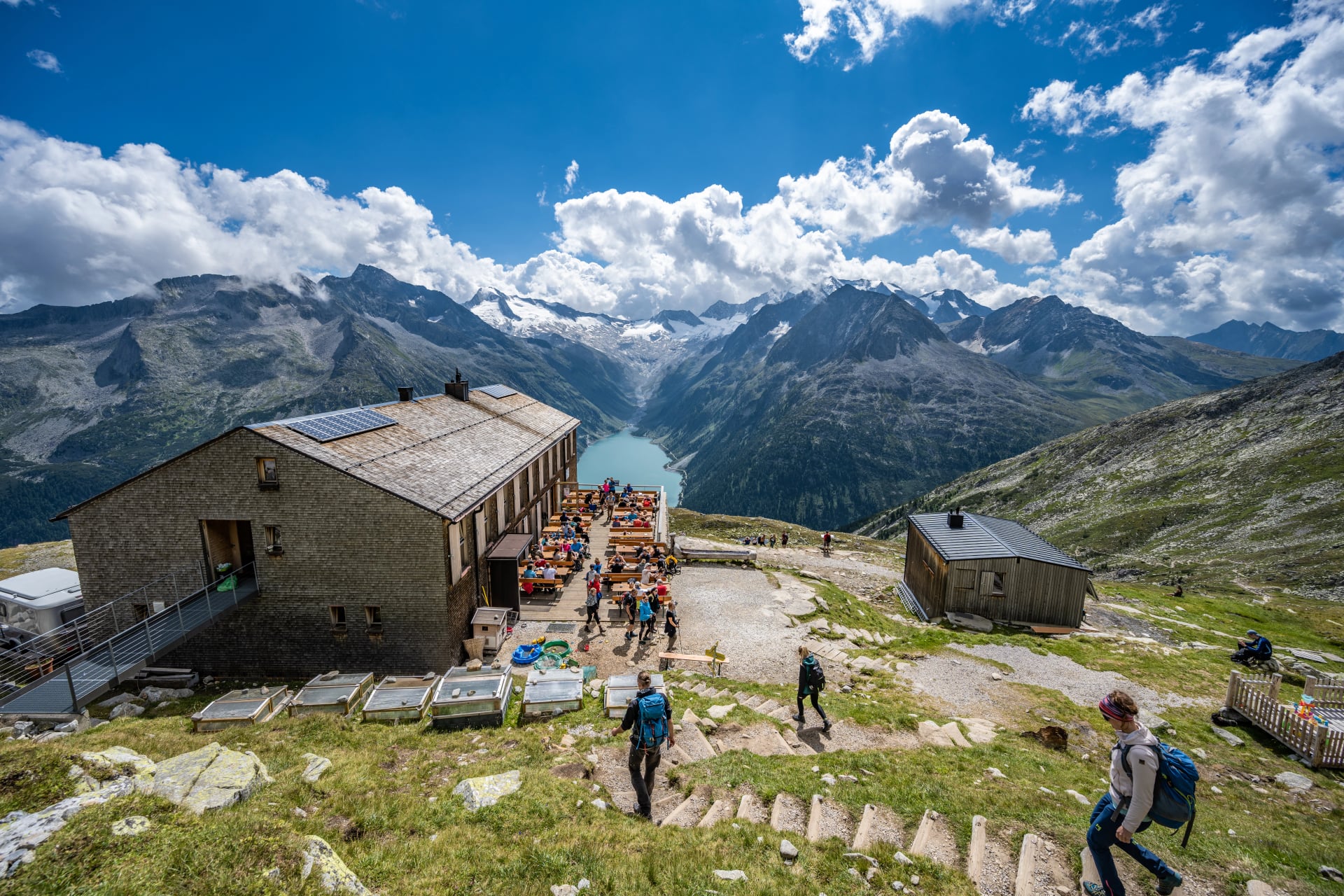
Most hikers reach the next hut between 2:00 and 4:00 PM. Check in with the warden, get your bunk assignment, and head to the boot room — hiking boots come off immediately and stay downstairs. Stash your pack at your bunk and hang any wet gear in the drying room (Trockenraum).
The afternoon window is free time, and how you use it is entirely personal. Some hikers order a drink on the terrace and sit in the sun. Others stretch, journal, take a short walk to a nearby viewpoint, or simply nap. Both approaches are equally valid after 6 hours on the trail — there is no obligation to do anything except show up for dinner.
Showers are not guaranteed at mountain huts. Some have coin-operated hot water (CHF 2–5), some have cold water only, and some have none at all. Wet wipes and a clean shirt solve most problems. For a full breakdown of what to expect at different hut types, see our guide to Swiss mountain huts and hotels.
Evening — Dinner, Social Life, and Sleep (6:00–10:00 PM)
Dinner is served at a fixed time — usually between 6:00 and 7:00 PM — at communal tables. Be seated when service begins; the kitchen runs one sitting and won't wait. Expect three courses of hearty mountain cooking: soup, a main (Rösti, polenta, pasta, or a meat dish), and dessert. Portions are generous — the kitchen knows you've been climbing all day. Drinks are not included in the half-board rate — wine, beer, and coffee are purchased separately at the bar.
The communal table is where the hut-to-hut community forms. Trail conditions, route tips, weather forecasts for tomorrow — useful information flows naturally over dinner without anyone having to ask. By the third or fourth night of a trek, you'll recognise the same faces moving in the same direction and fall into conversation easily.
Hüttenruhe begins at 10:00 PM. Quiet hours are strict and universally respected. Prepare everything for tomorrow before heading to your bunk — clothes laid out, pack organised, headlamp within reach. Earplugs are strongly recommended. Sleep comes fast after a full day on the trail.
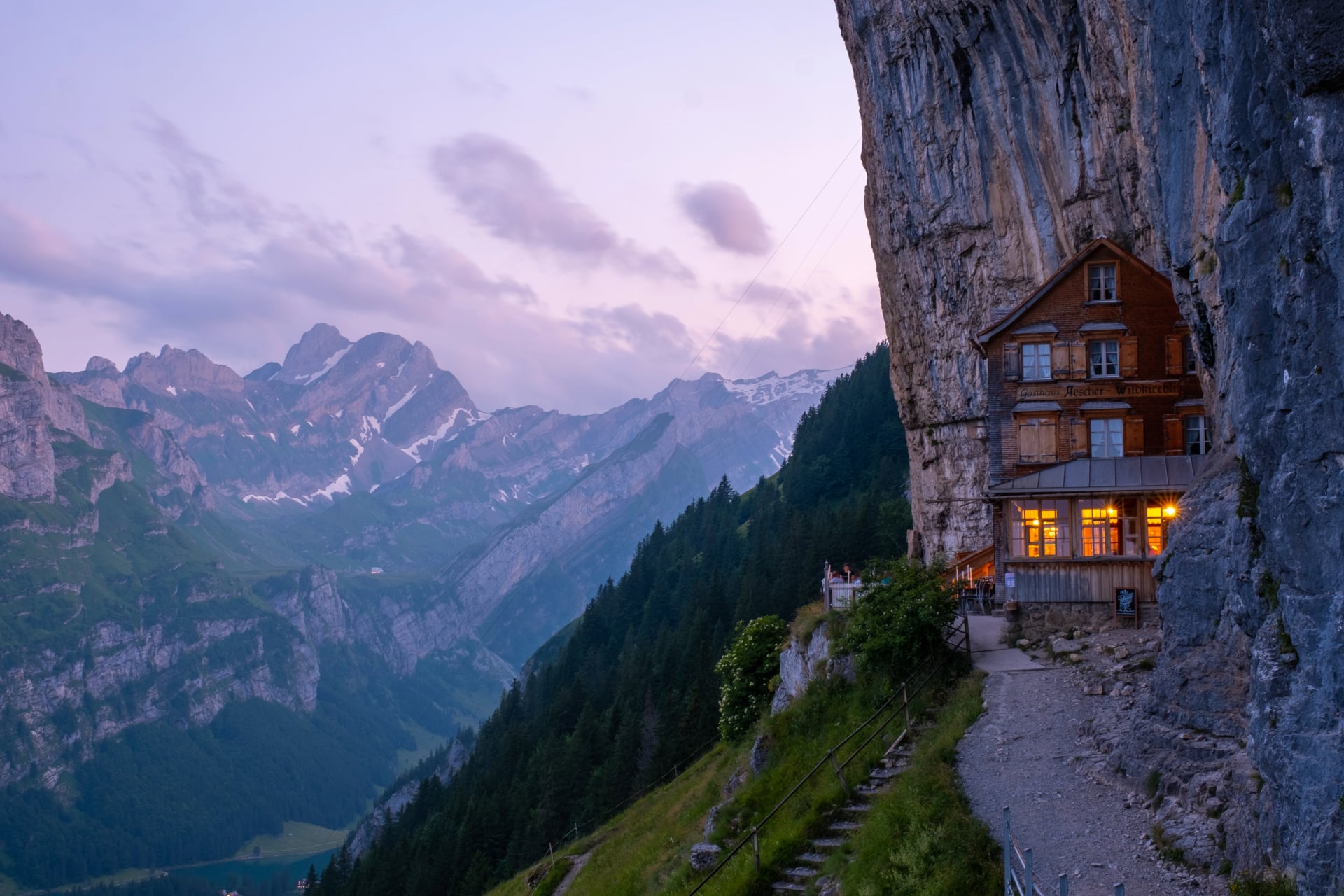
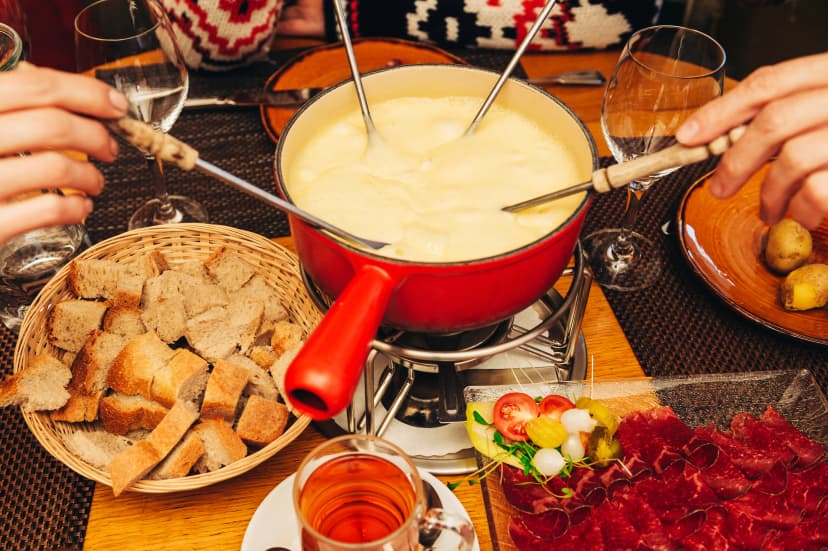
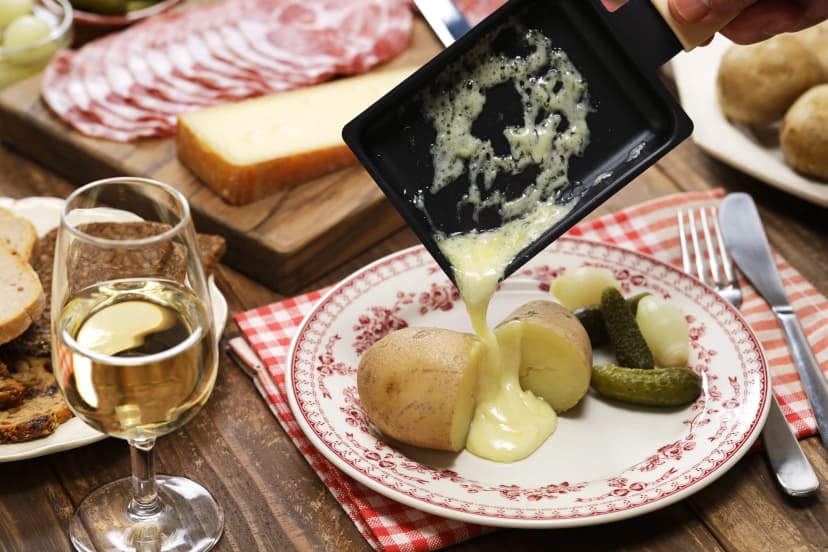
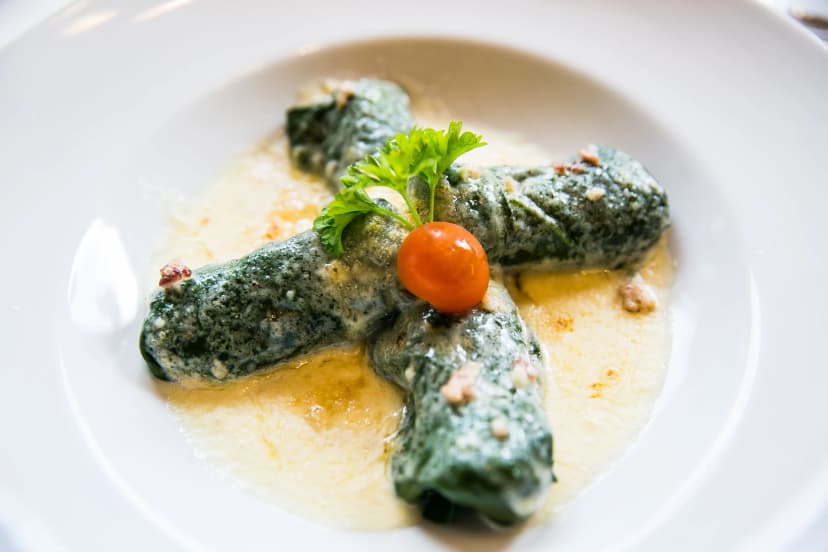
Dishes Worth Trying Along the Way
How to Prepare for Your First Day
If you're about to do this for the first time, a few things make the transition from reading about it to living it much smoother:
Build fitness beforehand — if you can hike 5–6 hours with 800 m of elevation gain and feel tired but not broken, you're ready for most Swiss routes
Break in your boots on at least 3–4 full-day hikes before departure — blisters on Day 2 are a preparation failure, not bad luck
Learn the trail markings — white-red-white for mountain hiking, white-blue-white for alpine routes with exposure
Download MeteoSwiss and cache offline maps before leaving home — mobile signal is patchy above 2,500 m
Carry cash in CHF — many huts above 2,500 m are cash-only
Pack your bag the night before each stage — dormitory mornings are dark and quiet, and fumbling through your kit wakes everyone
Start slow on Day 1 — your body adapts to altitude and sustained daily effort by Day 3; pushing too hard early leads to exhaustion mid-trek
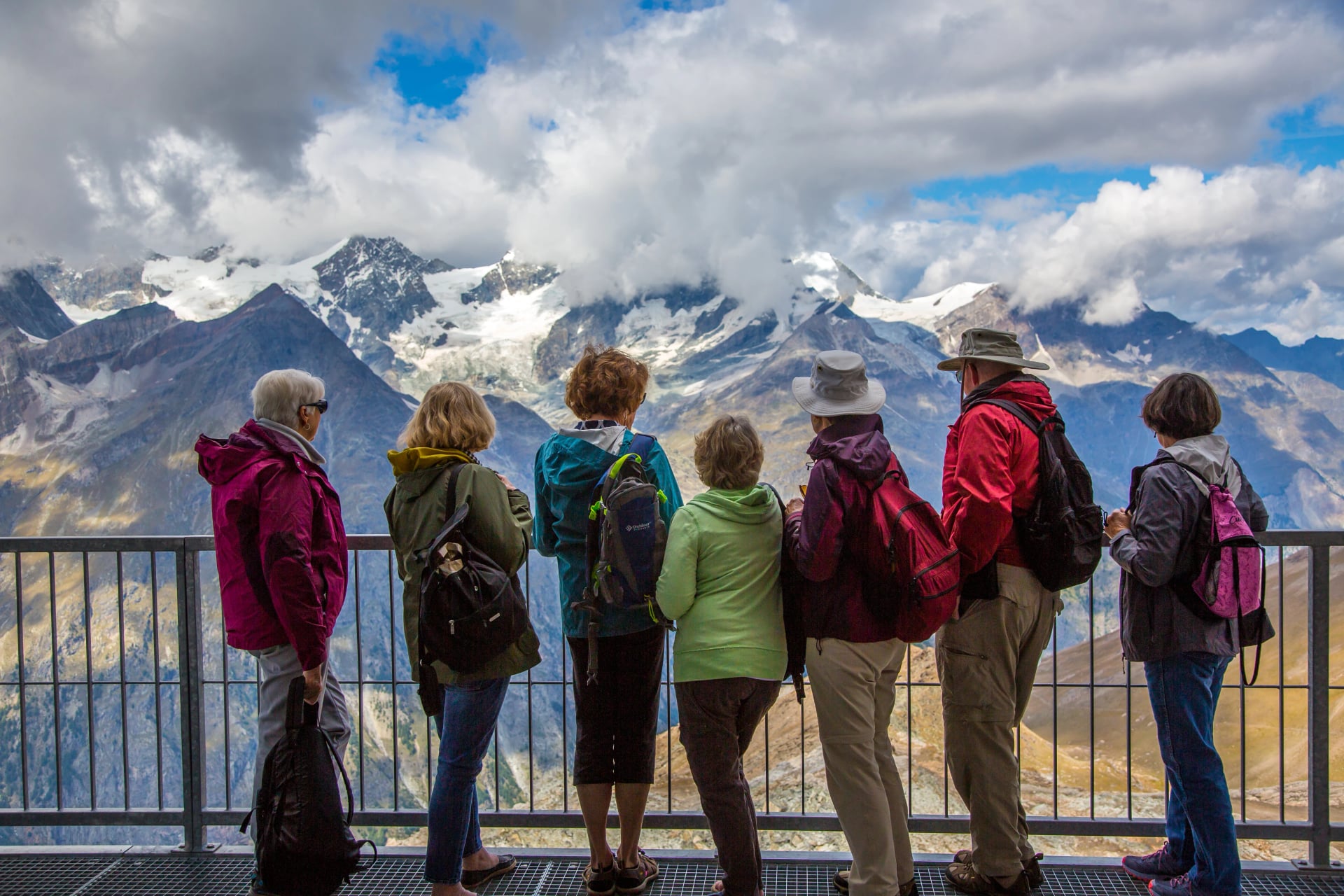
For daily updates on trail conditions, and stage details across every region, Wanderland Switzerland on SchweizMobil is the most comprehensive resource available.
Ready to Experience It?
This is what one day looks like. String 5–10 of these together and the rhythm becomes second nature — early mornings feel normal, pass crossings feel routine, and hut evenings feel like coming home. We build itineraries around stages exactly like this one, matched to your fitness, your comfort preferences, and the time of year.
Browse our Swiss hiking tours to find the right route, or send us an inquiry if you'd like help choosing. You can also book a free planning call to talk through timing, route options, and what to expect on the trail.

About this author
Jon is our travel advisor and an outdoor adventurer who is happiest on the move. While mountain biking is his personal passion, he thrives on crafting hiking adventures for others — planning routes and adding the little touches that turn a trip into a core memory.