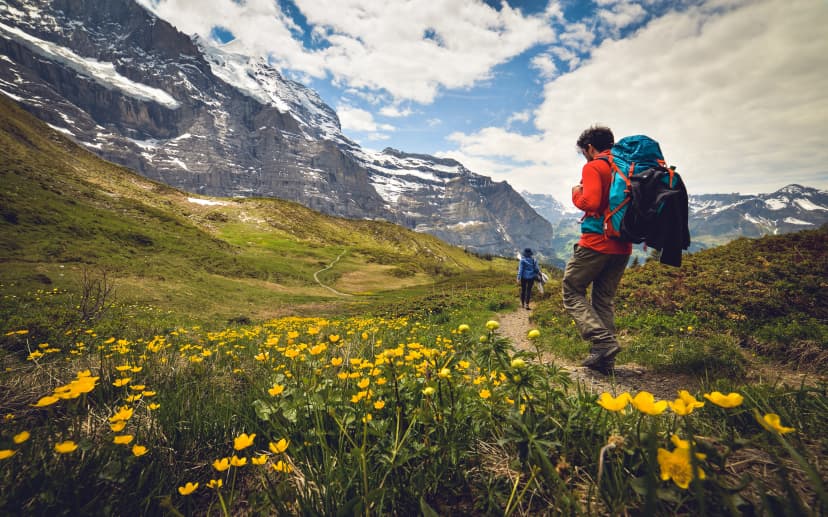
Hiking in Switzerland in Summer: High Season on the Trail
Summer is when the full Swiss alpine network opens. Here's what each month actually delivers — and how to plan around the busiest season on the calendar.

Jon
Published February 12, 2026
Edited March 16, 2026
8 min read
Don't want to read all this?
We've planned 2,000+ hiking trips. Send your dates, fitness and group size — we'll map the route and book every night.



Why Hike Switzerland in the Summer?
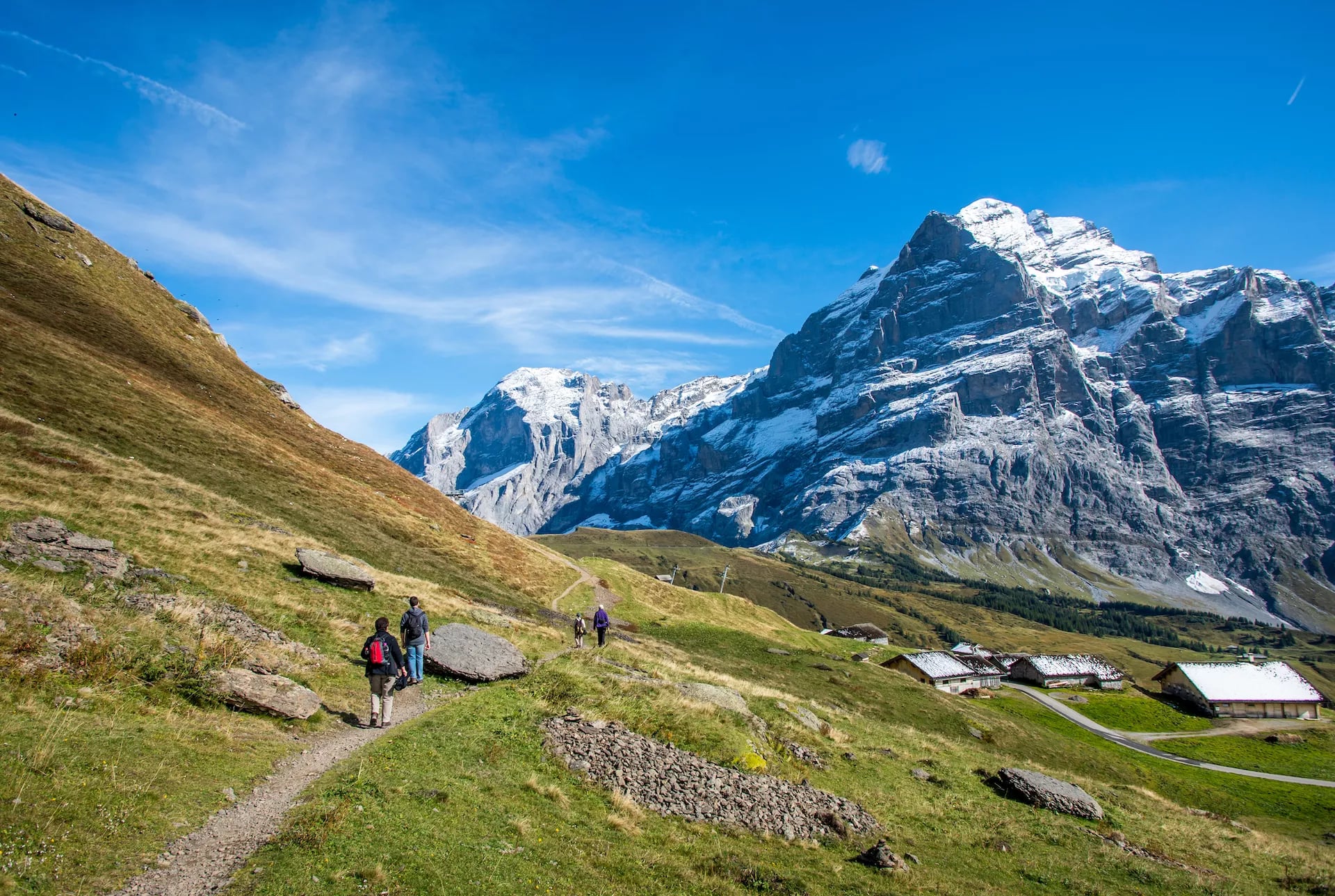
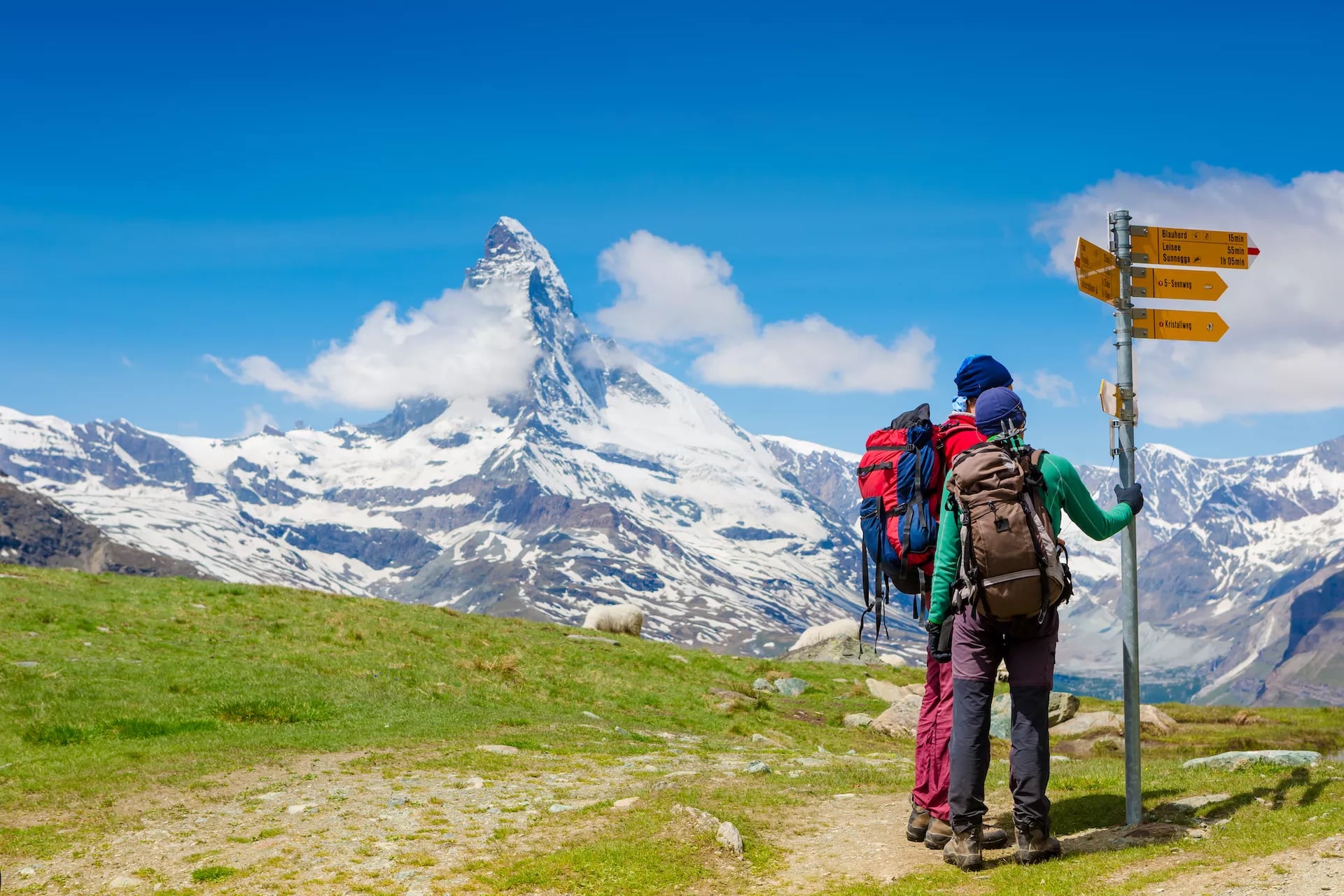
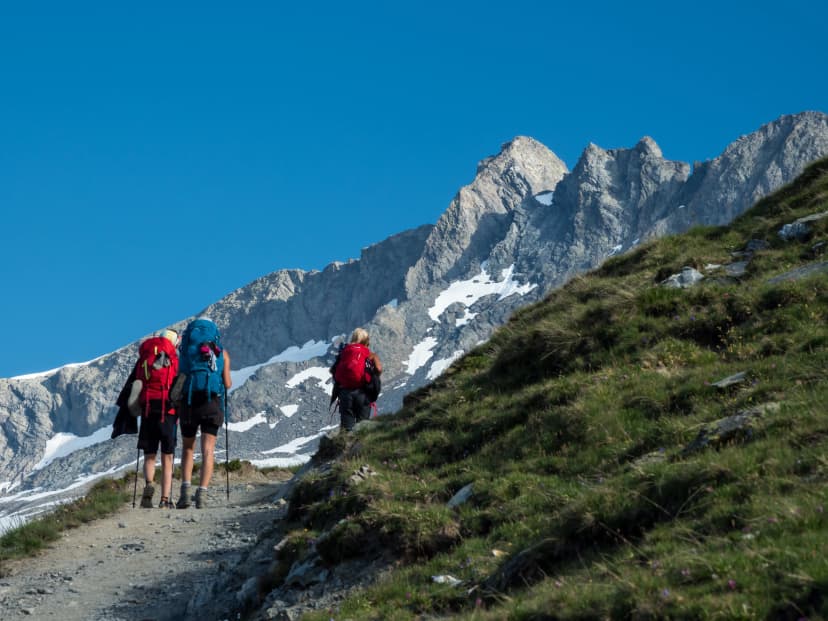
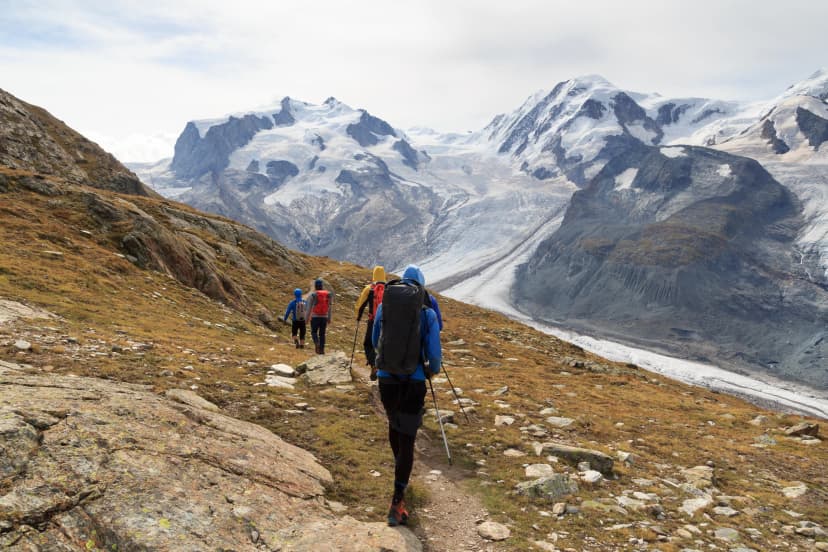
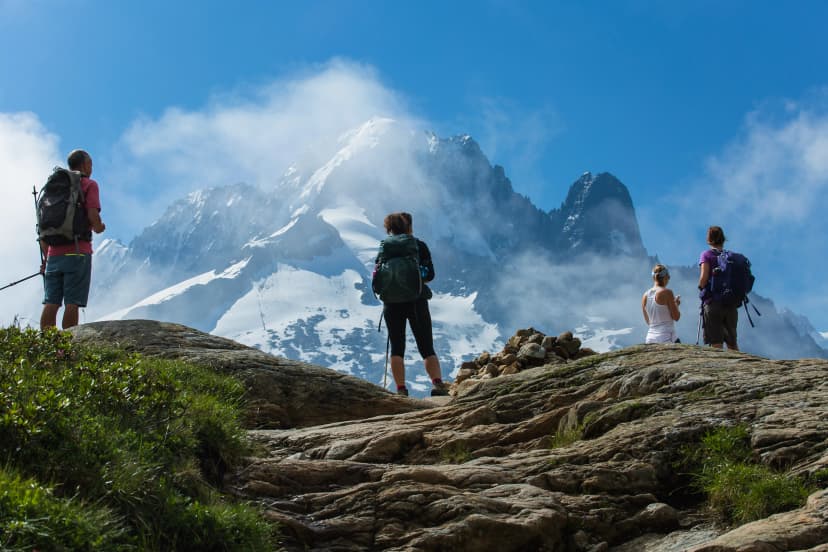
Summer is the definitive Swiss hiking season — and it earns that status. Between mid-June and mid-October, every high pass, every mountain hut, and every major trail in the country is open and operational. The routes that define Switzerland's international hiking reputation — the Walker's Haute Route from Chamonix to Zermatt, the Via Alpina crossing the full width of the country, the Bernese Oberland passes above Grindelwald — all require summer conditions to hike. No other season comes close to what this window delivers.
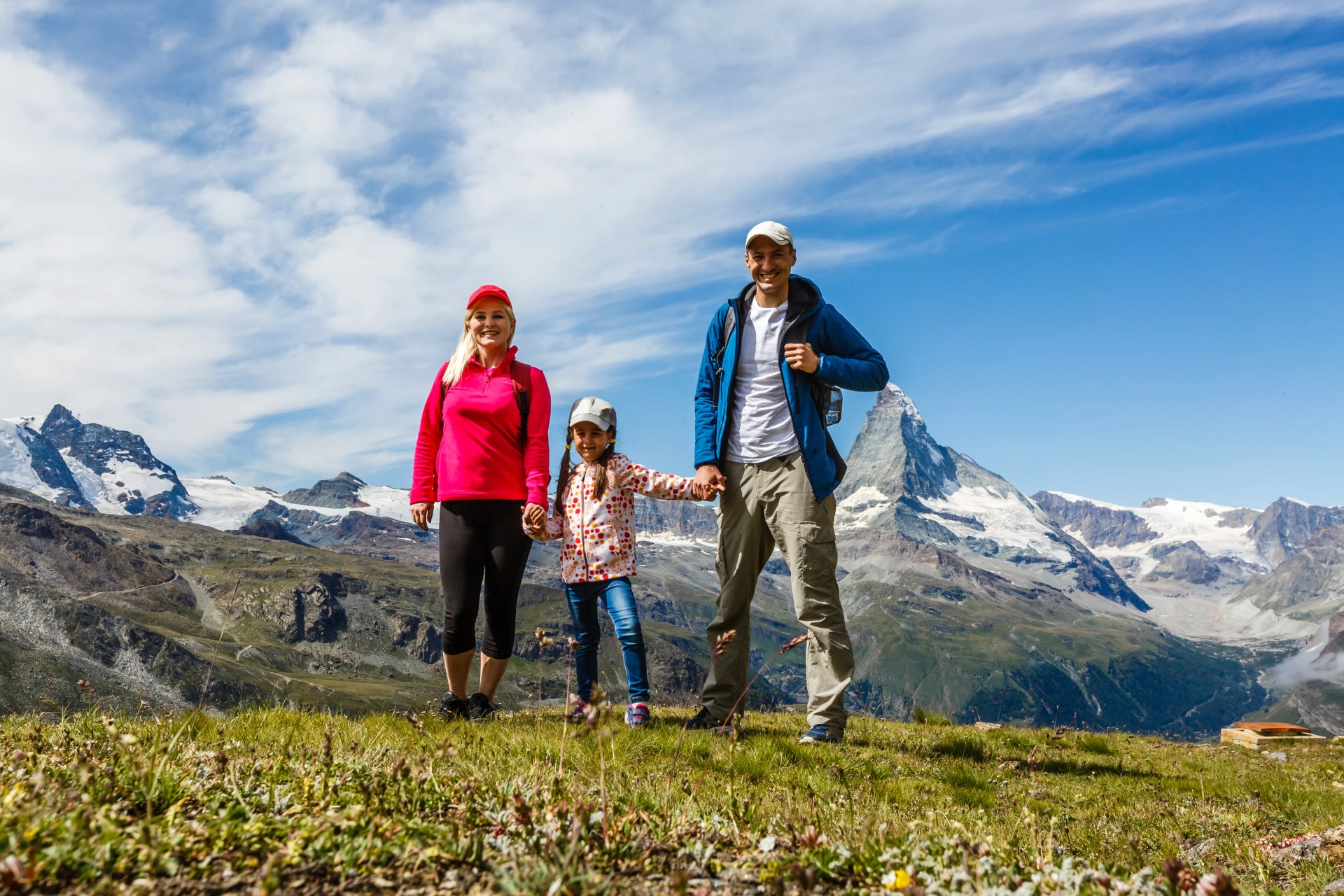
Here is what you are working with:
Season window: Full network open mid-June to mid-October; high passes typically clear from early July
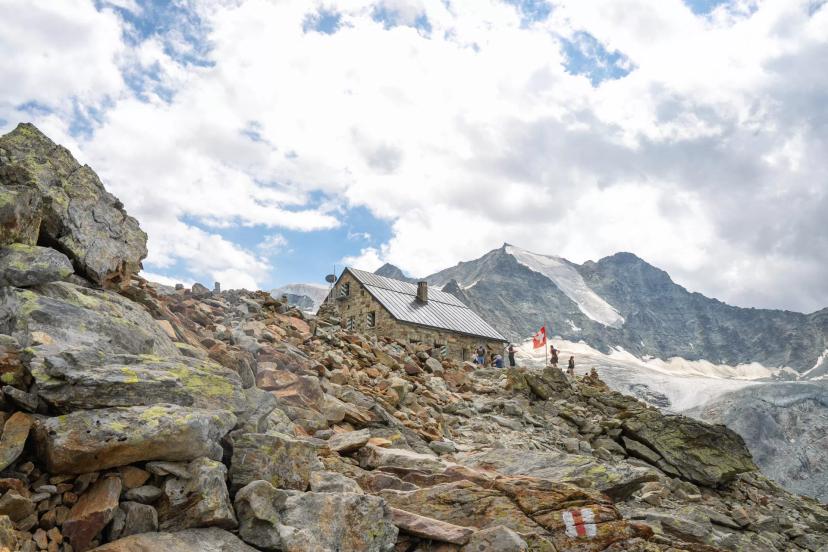
What's open: All high alpine routes, all SAC mountain huts, cable cars, passes, ridge trails, glacier viewpoints — the complete network
What's closed: Nothing meaningful — a handful of glaciated routes require specialist equipment year-round regardless of season
Daylight hours: June ~16 hrs; July ~15.5 hrs; August ~14 hrs — effectively limitless hiking time
Temperatures: 18–25°C in valleys; 8–15°C at altitude; afternoon thunderstorms common July and August
Crowds: Peak season — August especially; book accommodation 6–10 weeks ahead on popular routes
Best for: First-time Swiss alpine hikers, multi-day hut-to-hut routes, high-pass traverses, and all tour options in the portfolio
Summer is when Switzerland delivers everything its reputation promises. The question is which month suits you — and how to stay ahead of the crowds.
Summer Months Breakdown
Summer is not a single uniform block. Each month has its own character, its own conditions, and its own type of hiker.
Five Things to Know Before You Go
These are the practical details that separate a well-planned Swiss summer trip from a frustrating one.
Book accommodation before you book flights. This is the single most common planning error on Swiss summer routes. SAC huts on popular stages — Cabane du Mont Fort, Schönbiel Hütte, Europahütte, Grosse Scheidegg — fill six to ten weeks ahead in July and August. Once the huts are full, the stage either requires a long detour or becomes impossible to walk as planned. Get the hut bookings confirmed first; the flights can follow. Our guide to Switzerland's hiking towns covers which airports to fly into and how to get from the runway to the trailhead for every major summer route. For a full gear checklist suited to Swiss alpine conditions in every season, our packing guide covers everything you need.
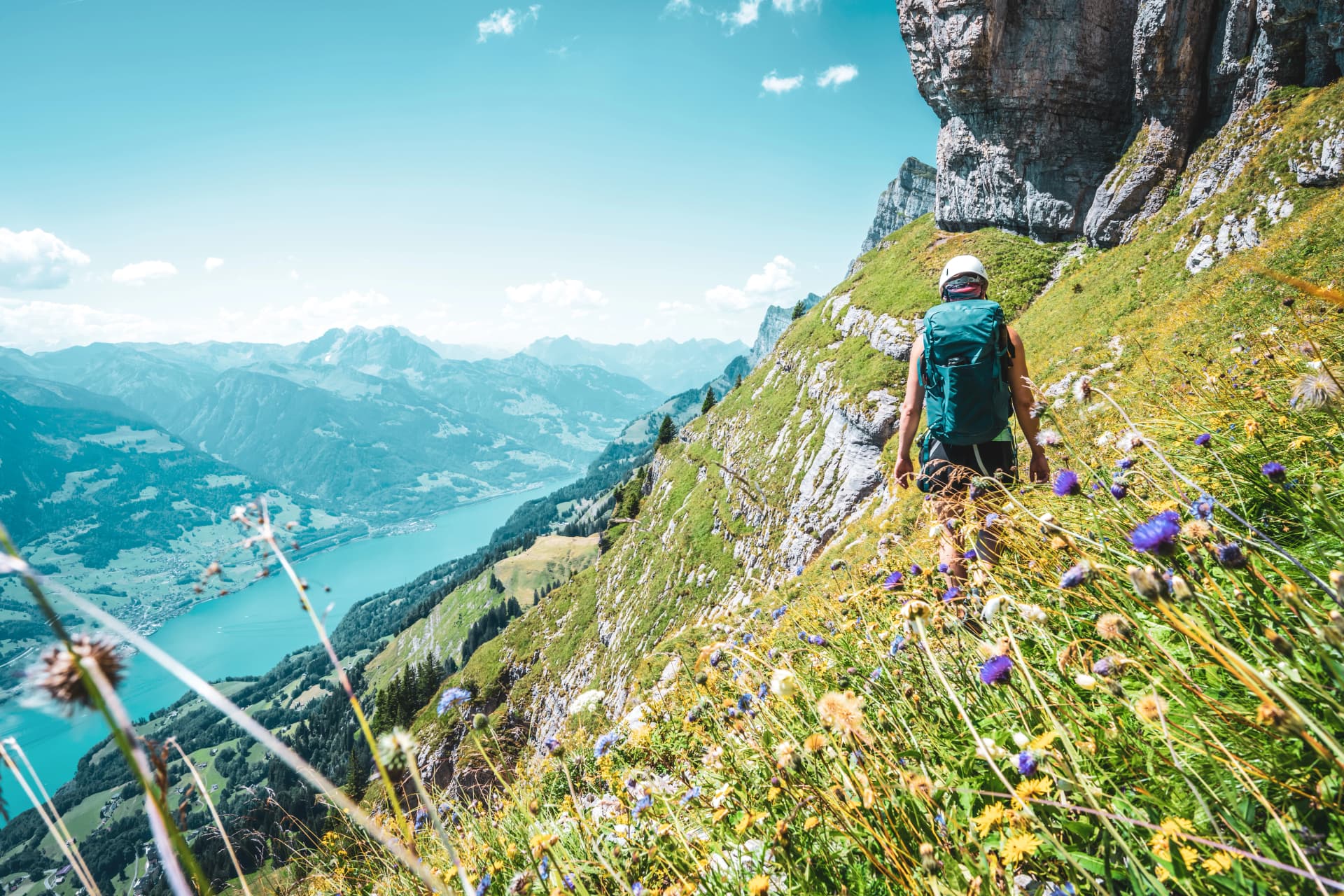
Afternoon thunderstorms are the main weather variable. High-pressure systems in July and August can hold for a week of perfect conditions and then break within two hours. The standard rule across all Swiss alpine trails is to cross high passes before noon and be at or below hut level by early afternoon. Thunderstorms above 2,000 m are fast-moving and dangerous; there is rarely shelter on an exposed ridge. Build this into your daily schedule rather than treating it as an edge case — on the Haute Route and Via Alpina, it applies to almost every stage. For a detailed month-by-month weather breakdown, our weather guide for Switzerland has the full picture.
Altitude accumulates differently across multi-day routes. A single day of 1,200 m ascent is manageable for most fit hikers. The same gain on day six of eight, with cumulative fatigue settled into the legs and the connective tissue, is a different proposition entirely. The hikers who struggle on day seven of the Haute Route are almost never unfit — they are undertrained for consecutive days. Train on back-to-back full days in the weeks before departure, not single large efforts with recovery days between.
June high passes need a conditions check. Mid-June hikers on the Haute Route, Via Alpina, or any route crossing passes above 2,500 m should verify current conditions before each high stage. A cold May pushes the full opening back by two to three weeks in some years. SchweizMobil and the SAC website both publish daily trail conditions; check both the evening before any high-pass stage in June.
Sun protection is non-negotiable above 2,000 m. UV intensity at altitude is roughly double that at sea level, and the effect is compounded by reflection off snow on higher passes in June and early July. Factor 50 sunscreen, glacier glasses, and a sun hat are not optional on full-day high-altitude stages — including on overcast days, when UV transmission through cloud is higher than most people expect. Sunburn above the treeline on day two of a fourteen-day route is not a minor inconvenience; it compounds across every subsequent day on the trail.
What Summer Unlocks
Summer doesn't just extend the hiking season — it opens experiences that are structurally unavailable at any other time of year.
How Summer Compares to the Other Seasons
Summer delivers maximum access, maximum infrastructure, and maximum company. It is the right choice for first-time Swiss alpine hikers, anyone with a specific high-altitude route in mind, and anyone for whom the mountain hut experience is a central part of the trip.
Spring delivers the wildflower meadows, snowmelt waterfalls, and genuinely empty trails — but at the cost of a significantly reduced route menu and limited hut infrastructure. Winter offers snowshoe circuits and valley walks with a solitude that summer cannot approach, but the high alpine world is entirely closed. Each season makes a different argument. Our guides to hiking in Switzerland in spring, in autumn and hiking in Switzerland in winter give you the full comparison if you are flexible on timing.
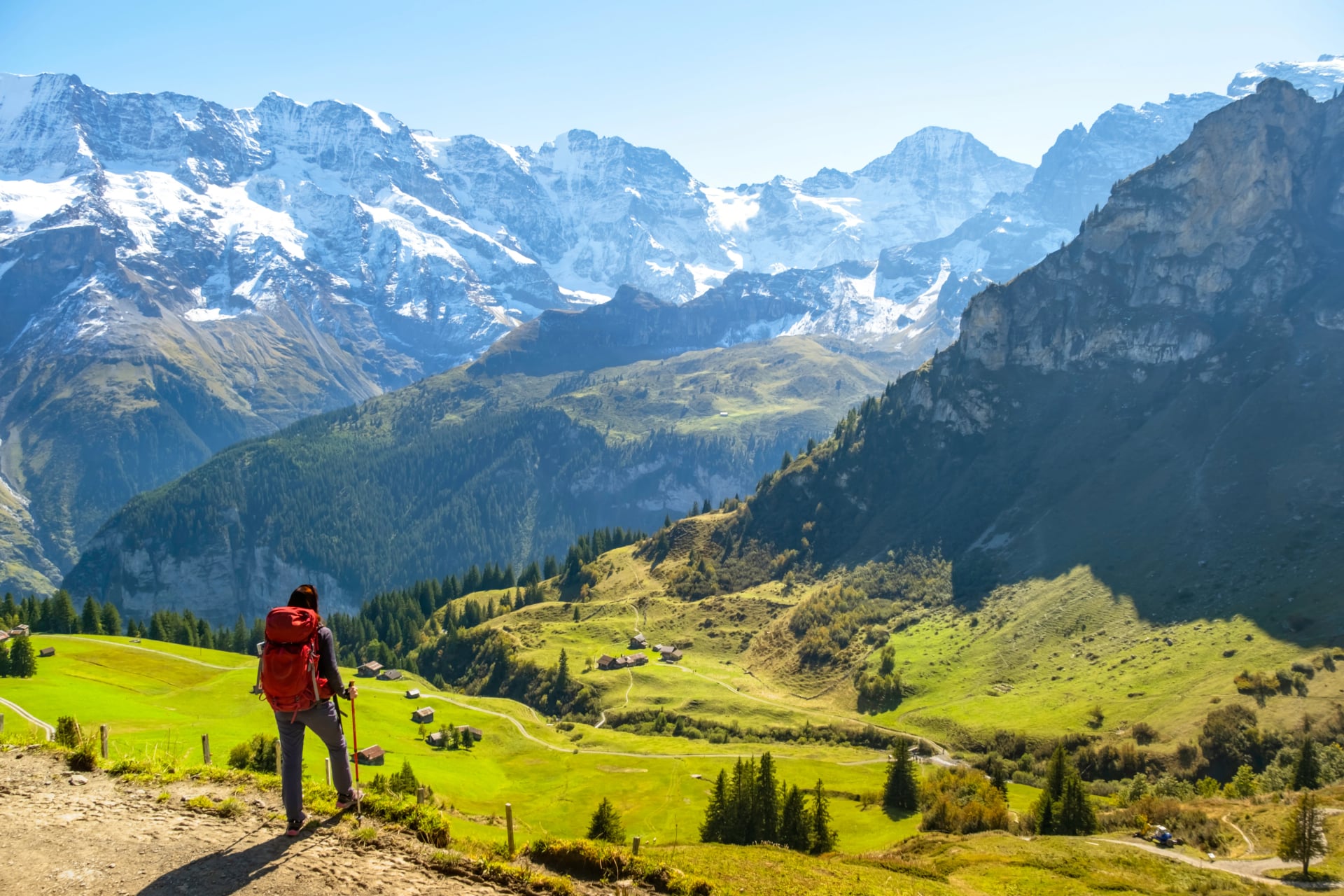
The Tours
Summer is the only season when every tour in the portfolio is available. To keep things useful rather than overwhelming, we have grouped them into two tiers based on experience level. The full selection — including the Mont Blanc to Matterhorn Traverse, full Via Alpina and multiple others — is on the tours page.
If you are unsure which tour matches your fitness level and timing, get in touch and we will help you find the right fit.
For First-time Swiss Alpine Hikers
1. Aletsch Glacier Panorama Trail
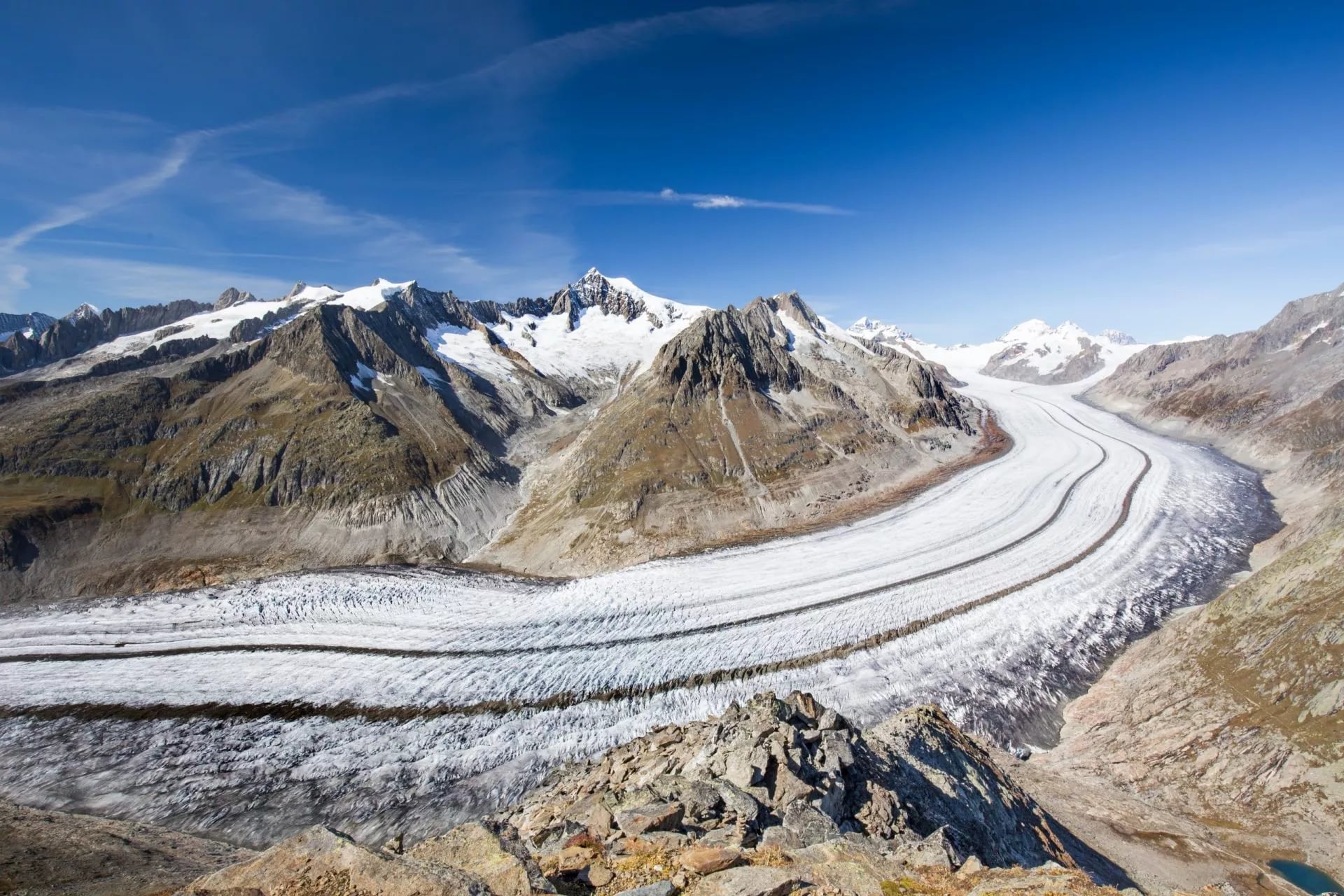
The most accessible entry point in the portfolio. The trail follows the ridge above the largest glacier in the Alps rather than crossing high passes, keeping the technical demand low while the scenery remains extraordinary. A strong choice for hikers who want their first Swiss alpine experience without the accumulated fatigue of a longer multi-day route. Viable from late May; at its best in June and July before August heat in the lower valley sections.
2. Greina Plateau Hike
The Greina Plateau is one of the last uninhabited high plains in the Alps — a remote, treeless landscape above 2,000 m that sees far fewer visitors than the Bernese Oberland routes. Three days, manageable fitness demand, and a genuine sense of remoteness make this the ideal introduction to hut-to-hut hiking for those who are not yet ready for the longer routes. The shortest tour in the portfolio and one of the most distinctive experiences in it.
For Experienced Mountain Hikers
1. Via Alpina: The Bear Trek
The finest nine-day stretch of the full Via Alpina, running through the heart of the Bernese Oberland from Meiringen to Lenk. The Hohtürli Pass at 2,778 m is the high point — both literally and in the memory of most hikers who cross it. Strong cumulative fitness is required for nine consecutive days of 1,000 m+ elevation gain, but the route never demands technical scrambling or exposure beyond what a surefooted hiker handles comfortably. Open July through September; August is the most popular departure month.
2. Walker's Haute Route Self Guided
The benchmark Swiss alpine route and the most demanding in the portfolio. Chamonix to Zermatt in fourteen stages, crossing eleven passes, including the Pas de Chèvres iron ladder at 2,855 m and the Europaweg high trail above the Matterhorn. Full fitness and solid mountain experience are prerequisites — this is not a first alpine hike. The reward is proportional: no other route in the portfolio delivers fourteen consecutive days of this quality.
Best done in July for conditions; August for atmosphere. Also available as a seven-day West or East half for those with limited time. Explore all formats on the tours page.
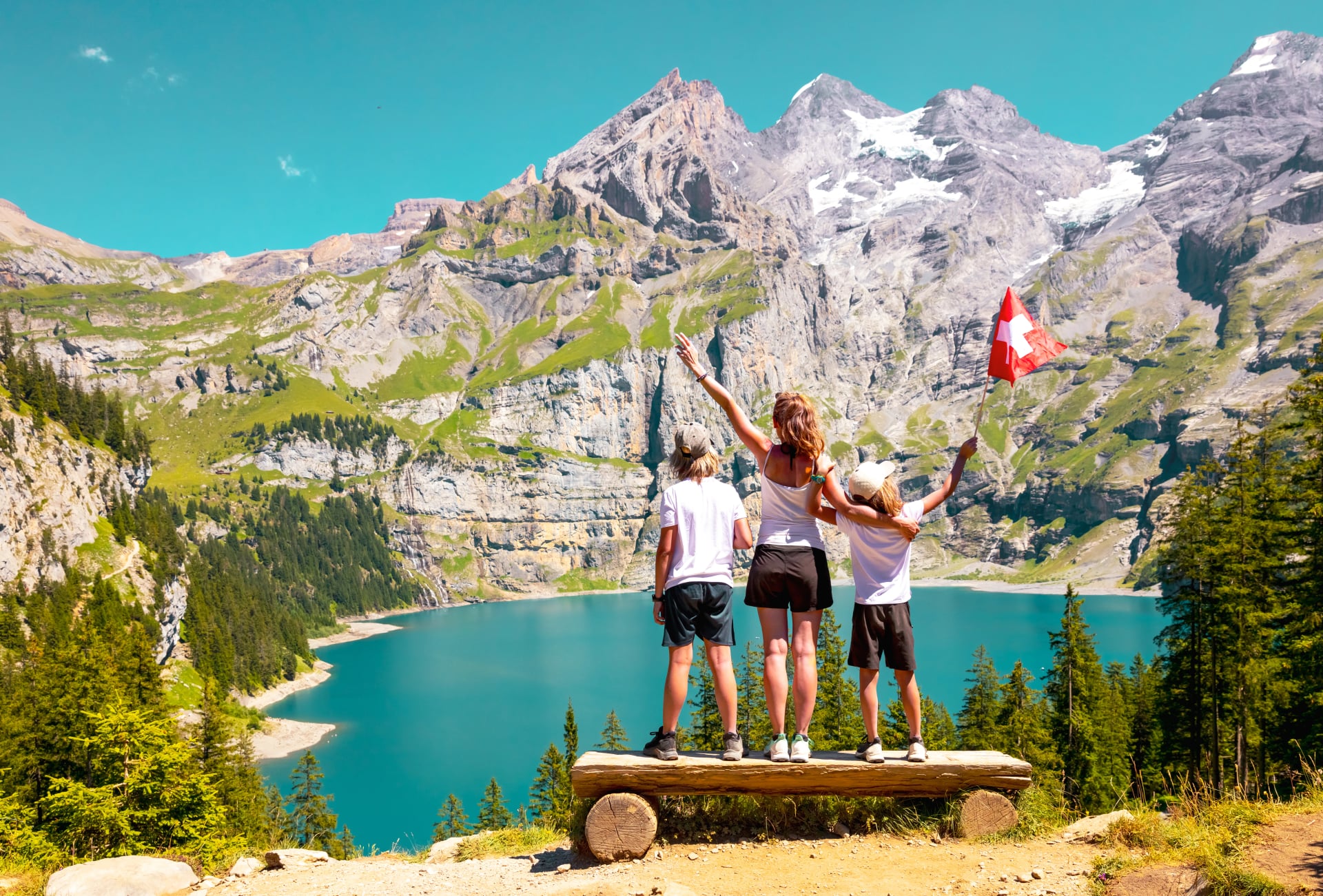
Swiss Summer Awaits!
Summer hiking in Switzerland is what the country's alpine reputation is built on — and it delivers. The passes are open, the huts are running, the days are long, and the routes are as good as anything in Europe. The main variable is not weather or fitness; it is logistics.
Book early, start each day before the afternoon storms build, train for consecutive days rather than single efforts, and summer in the Swiss Alps will give you exactly what it promises.
Browse our full summer tour selection or get in touch to talk through the right route, the right month, and the right preparation for your trip.

About this author
Jon is our travel advisor and an outdoor adventurer who is happiest on the move. While mountain biking is his personal passion, he thrives on crafting hiking adventures for others — planning routes and adding the little touches that turn a trip into a core memory.